
Floors That Handle Basement Moisture and Use
Basement Flooring in Kalamazoo for properties dealing with concrete dusting, dampness, and temperature-related cracking
Concrete slabs in lower levels develop surface dusting, retain moisture, and crack under freeze-thaw pressure common to Michigan basements. Best Step Coatings, LLC applies moisture-resistant epoxy and polyaspartic floor coating systems throughout Kalamazoo that seal porous concrete, prevent mold growth, and withstand the humidity and temperature swings typical in below-grade spaces. These coatings transform dark, damp utility areas into functional living spaces, playrooms, or home gyms with non-slip, seamless surfaces that reflect light and resist staining.
The coating process begins with moisture and concrete testing to assess hydrostatic pressure and slab integrity, followed by diamond grinding or shotblasting to achieve the correct concrete surface profile for adhesion. Cracks and joints are repaired with commercial-grade fillers before the base coat is applied and decorative chip broadcast is embedded, then sealed with a clear protective topcoat that resists chemicals and stains. This system addresses the specific challenges of basement environments where condensation, groundwater intrusion, and temperature cycling damage unprotected concrete over time.
Schedule a property evaluation to assess your basement slab condition and moisture levels.
What Proper Basement Floor Coatings Require
Surface preparation determines coating performance in below-grade environments. Mechanical grinding removes surface laitance and opens the concrete pores, allowing the epoxy or polyaspartic base coat to penetrate and bond at the molecular level rather than sitting on top of a dusty or sealed surface. Moisture testing with calcium chloride kits or relative humidity probes identifies vapor emission rates that dictate which coating chemistry will adhere without delaminating when groundwater pressure forces moisture upward through the slab.
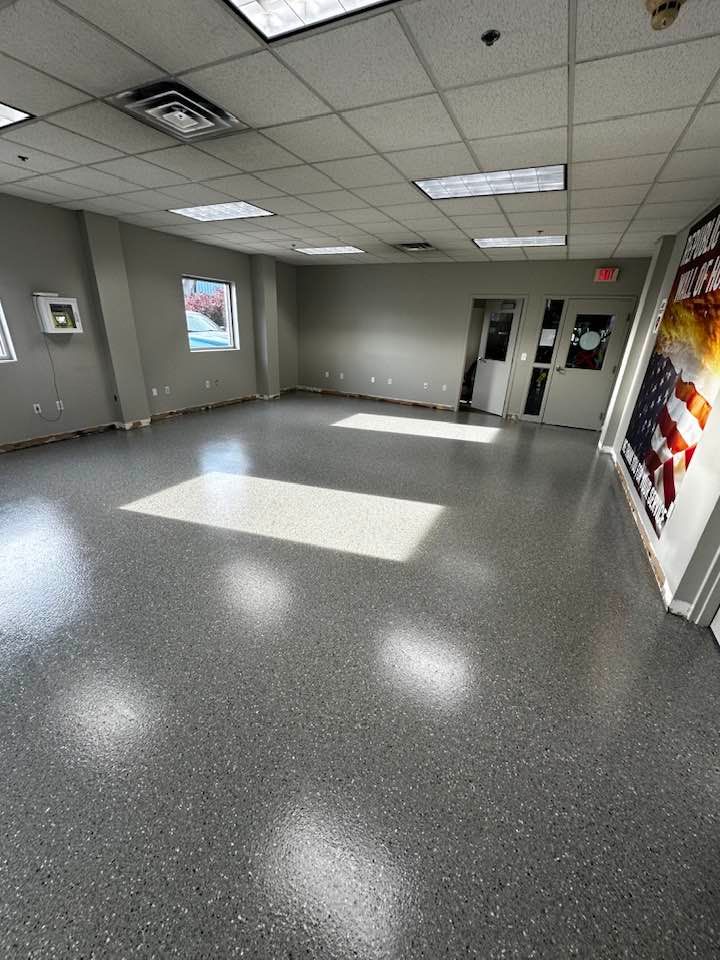
Once the system cures, you notice concrete that no longer produces dust when swept, surfaces that shed water instead of absorbing it, and a finish that brightens the space by reflecting overhead lighting across the glossy topcoat. The seamless surface eliminates grout lines where mold grows and prevents moisture from pooling in cracks or pitted areas. Polyaspartic topcoats cure rapidly even in cool basement temperatures, allowing the space to return to use within one to two days depending on humidity and ventilation.
Coating systems include options for decorative flake broadcast that adds texture and slip resistance, urethane cement layers for slabs with high moisture vapor emission, or grind-and-seal finishes for minimalist industrial aesthetics. The choice depends on your slab's moisture profile, the intended use of the space, and whether you need additional vapor mitigation beyond what standard epoxy provides.
What Property Owners Usually Ask
Basement floor coating decisions in Kalamazoo depend on slab conditions, moisture levels, and how the space will be used once finished.
- Can you apply epoxy flooring over a basement floor with moisture issues? Coatings are applied only after moisture testing confirms vapor emission rates fall within the tolerance range of the selected system, or a urethane cement moisture barrier is installed to block hydrostatic pressure that would cause delamination in standard epoxy.
- How long does basement epoxy take to cure in Michigan winters? Polyaspartic coatings cure in cooler basement temperatures faster than traditional epoxy, typically allowing light foot traffic within 24 hours and full use within 48 hours, while epoxy may require three to five days depending on ambient conditions and ventilation.
- Are floor coatings safe for indoor air quality and low in VOCs? Polyaspartic systems emit minimal volatile organic compounds during application and cure, making them suitable for occupied homes, while solvent-based epoxies require ventilation during installation and off-gassing periods before reoccupying the space.
- How do I clean and maintain my coated basement floors? Routine cleaning involves sweeping loose debris and mopping with neutral pH cleaners, avoiding ammonia or bleach-based products that degrade the topcoat, and the sealed surface prevents moisture absorption that leads to mold or mildew growth underneath.
- What happens if the concrete cracks after the coating is applied? Hairline cracks are filled and reinforced during prep, but movement cracks caused by settling or hydrostatic pressure may telegraph through coatings over time and require crack routing, flexible polyurea fill, and localized topcoat reapplication to restore the seal.
Best Step Coatings, LLC provides free on-site inspections in Kalamazoo County to test slab moisture, evaluate existing damage, and recommend coating systems engineered for your basement's specific conditions. Request a detailed estimate based on your current basement floor condition and intended use.