Winterizing Your Basement: Protecting Concrete Slabs from Humidity and Salt Damage in Allegan, MI
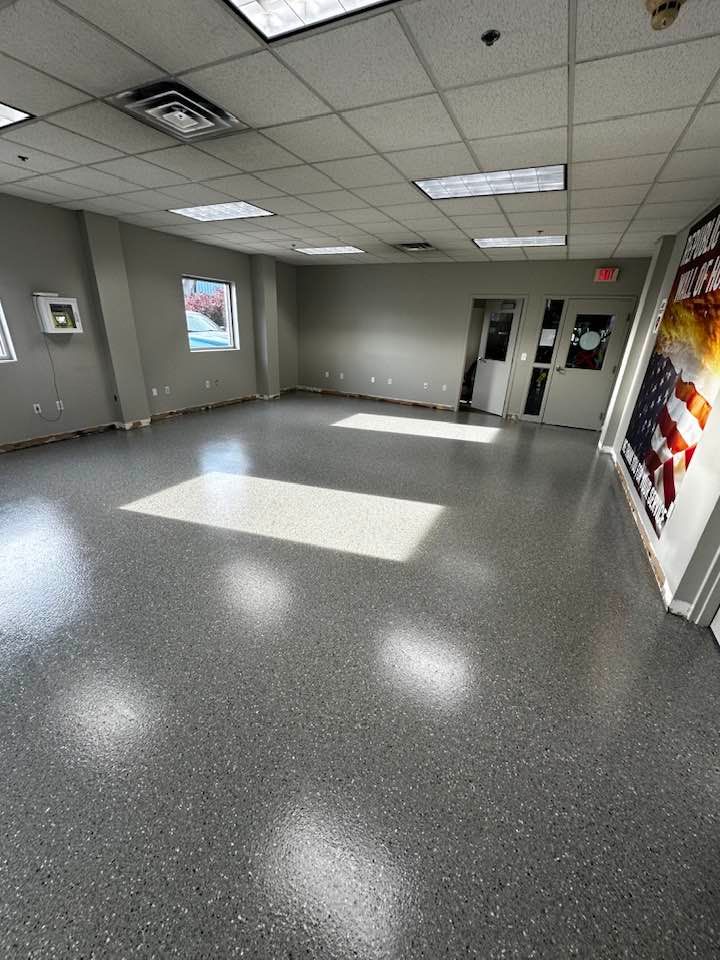
Moisture-resistant floor coatings in Allegan, MI protect basement concrete from road salt, snow tracked indoors, and winter humidity fluctuations that degrade unfinished slabs and compromise indoor air quality.
How Does Road Salt Damage Basement Concrete?
Road salt tracked indoors on boots and stored equipment draws moisture into concrete pores, causing surface scaling, spalling, and accelerated deterioration throughout the winter season.
Sodium chloride and calcium chloride used on Allegan roads are hygroscopic, meaning they attract and hold water molecules. When salt-contaminated snow melts on your basement floor, the salt penetrates the concrete and pulls additional moisture from the air and ground below. This moisture then freezes and expands during cold snaps, creating internal pressure that breaks apart the concrete surface.
Repeated freeze-thaw cycles compound this damage, creating rough, flaking surfaces that are difficult to clean and unsafe to walk on. A protective coating seals the concrete before salt can penetrate, preventing this destructive cycle.
What Causes Winter Humidity Fluctuations in Basements?
Temperature differences between heated indoor air and cold foundation walls create condensation, while snow melt around the foundation increases ground moisture that rises through unprotected concrete slabs.
When warm, humid air from your furnace contacts cold basement walls and floors, water vapor condenses into liquid droplets. This condensation accumulates on uncoated concrete, creating damp conditions ideal for mold growth. Simultaneously, melting snow saturates the soil around your foundation, increasing hydrostatic pressure that forces moisture upward through the slab.
These combined moisture sources overwhelm basement dehumidifiers and create persistent dampness that damages stored items and degrades air quality throughout your home.
Can Coatings Prevent Mold Growth During Winter?
Yes, seamless floor coatings eliminate the porous surface where mold spores colonize and block the moisture transmission that mold requires to grow in basement environments.
Mold needs three things to thrive: organic material, moisture, and moderate temperatures. Bare concrete provides the first two, especially when it absorbs moisture from the ground or condensation. A properly installed coating system removes the porous surface where mold can establish itself and stops moisture from reaching the concrete.
Homeowners who discover concrete repair solutions in Allegan often find that addressing moisture issues through coating installation prevents recurring mold problems more effectively than repeated cleaning.
Which Areas of Basements Face the Most Winter Damage?
Entry areas near basement doors, utility zones around water heaters and furnaces, and storage sections where winter equipment sits accumulate the most salt, moisture, and wear during cold months.
The path from your basement entrance to your utility area sees constant traffic during winter, tracking in snow, salt, and mud. Water heaters and washing machines create localized humidity that condenses on nearby concrete. Storage areas for snow blowers, shovels, and ice melt bags concentrate salt exposure in specific zones.
These high-stress areas deteriorate faster than the rest of your basement floor, creating uneven surfaces and safety hazards. A comprehensive coating system protects the entire floor uniformly, regardless of traffic patterns or moisture exposure.
Do Coatings Require Special Winter Maintenance?
Coated floors require only regular sweeping to remove tracked-in salt and debris, plus occasional damp mopping to maintain their protective properties throughout the winter season.
The non-porous surface prevents salt from penetrating the coating, so simple cleaning removes contaminants before they can cause damage. Unlike bare concrete that requires scrubbing to remove salt stains, coated floors wipe clean with minimal effort. This ease of maintenance encourages regular cleaning that extends the life of both the coating and the concrete beneath.
Placing mats near basement entrances captures most salt and snow before it reaches the main floor area, further reducing maintenance needs.
When Should Allegan Homeowners Inspect Their Basement Floors?
Early fall provides the ideal time to inspect basement floors for cracks, moisture issues, and surface damage before winter weather makes problems worse and installation more difficult.
A professional inspection identifies existing damage that requires repair before coating installation. Small cracks that seem insignificant in autumn can expand dramatically during winter freeze-thaw cycles, requiring more extensive and expensive repairs by spring. Addressing these issues in October or early November ensures your basement is protected before the first snowfall.
This proactive approach saves money and prevents the emergency repairs that often result from winter damage to unprotected concrete.
Best Step Coatings helps Allegan homeowners winterize their basements with moisture-resistant coating systems that protect against salt, humidity, and freeze-thaw damage. Plan your basement floor upgrade this fall to maintain a dry, healthy space all winter long.